Through Hollow Shaft Incremental Encoders
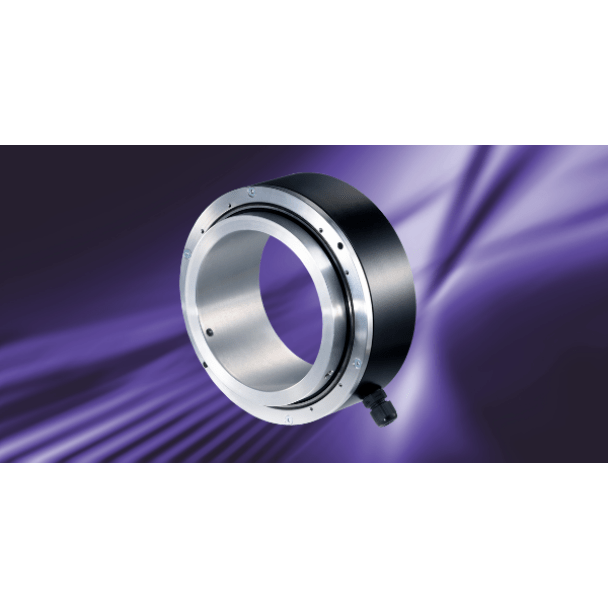
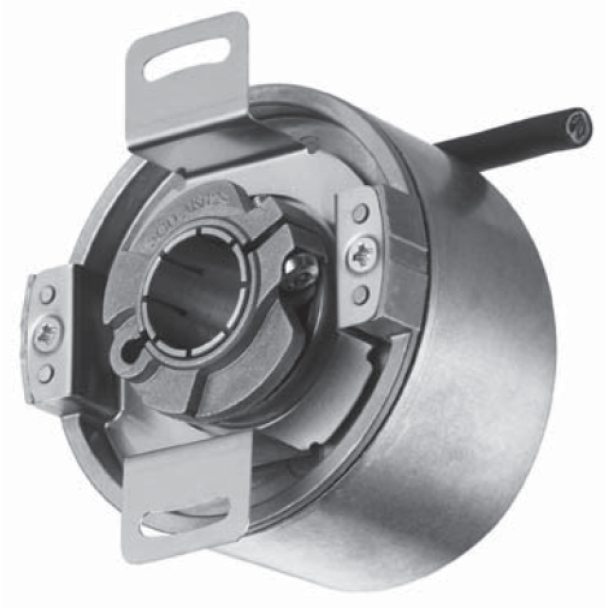
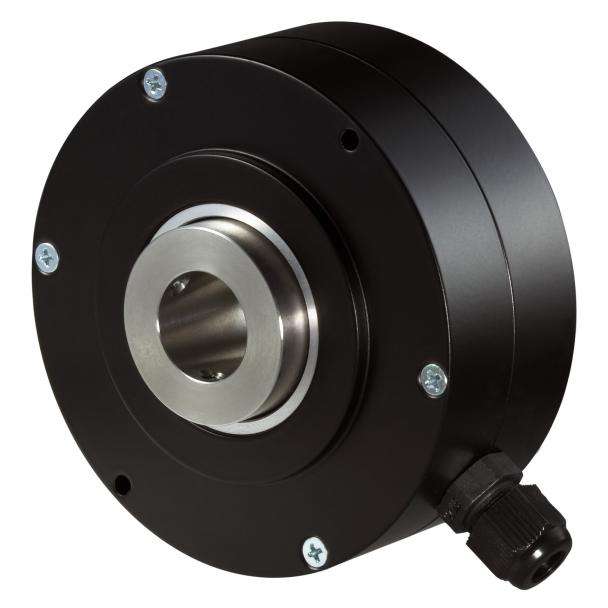
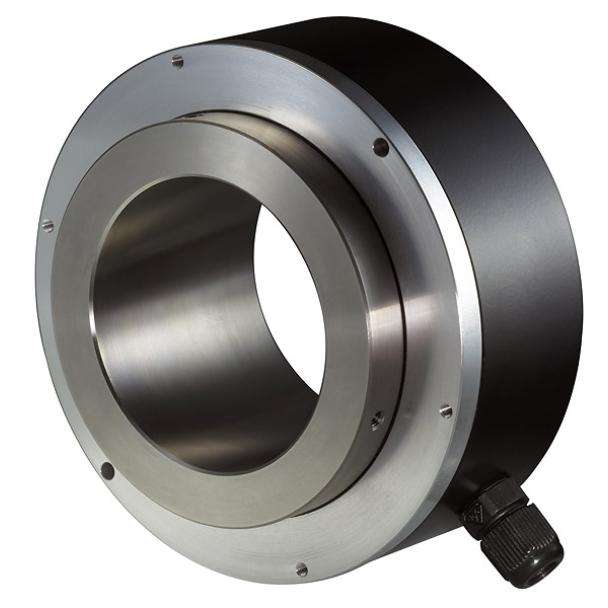
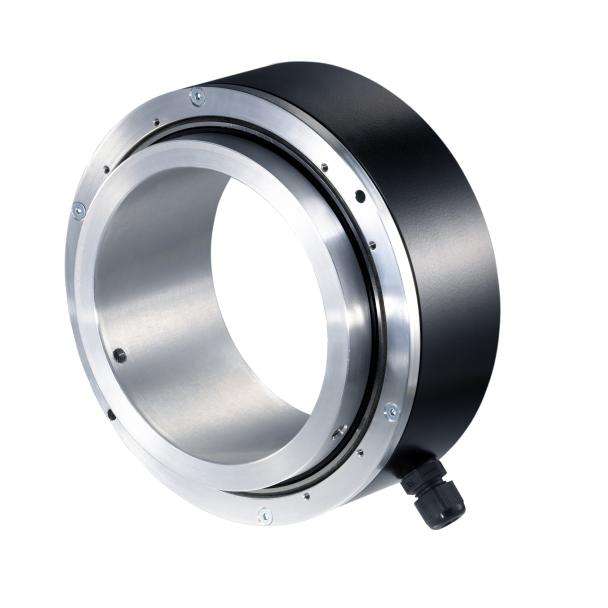
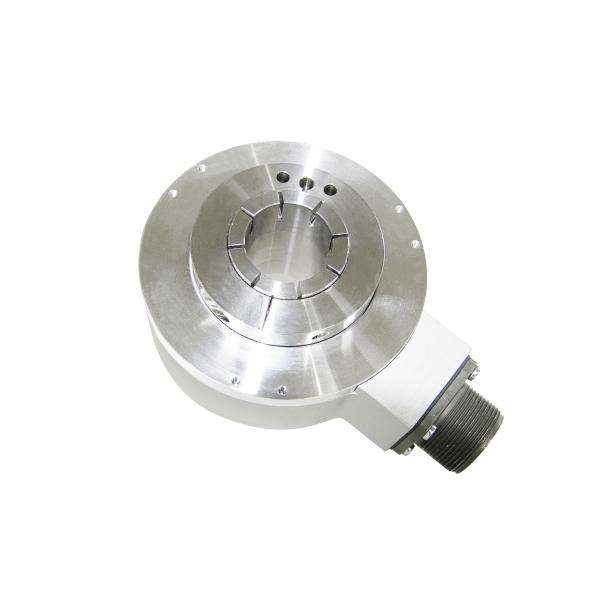
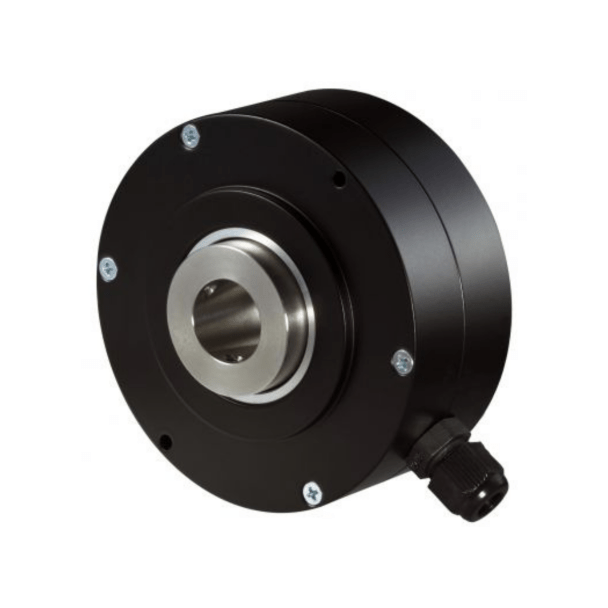
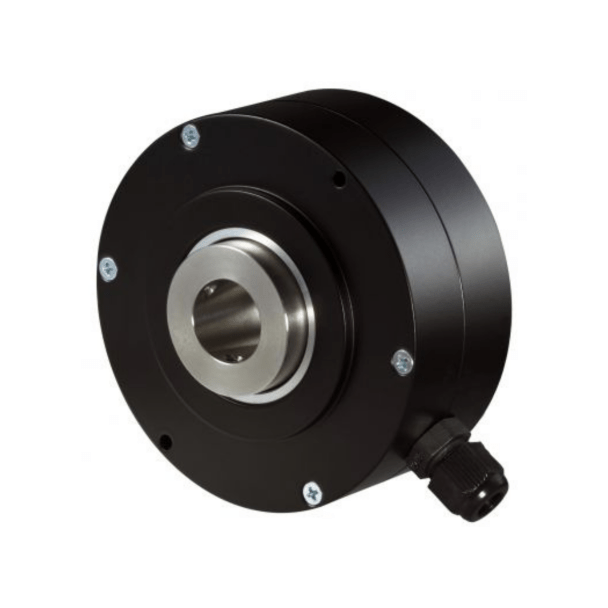
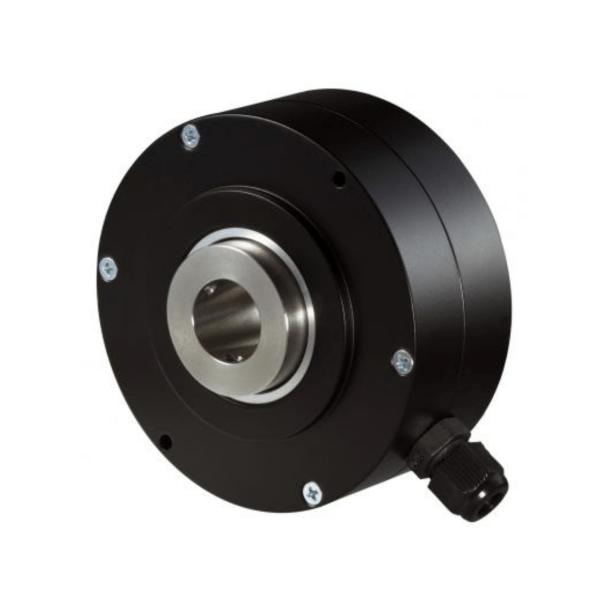
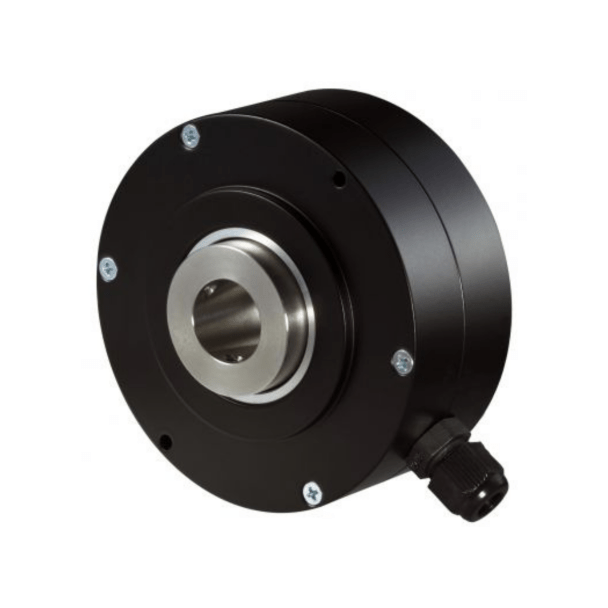
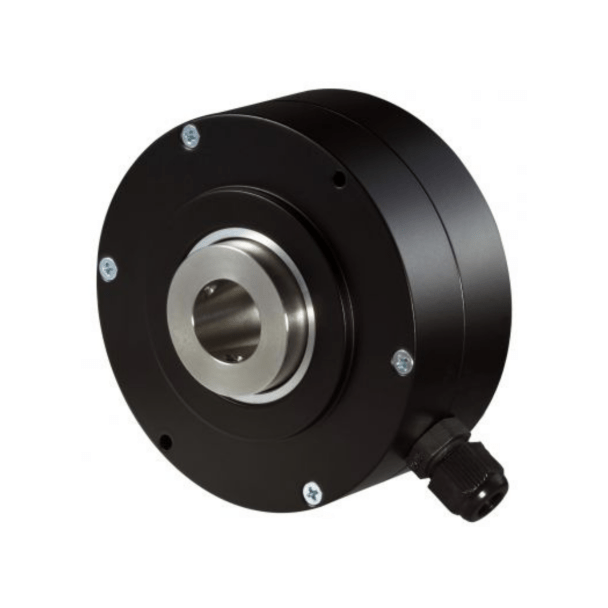
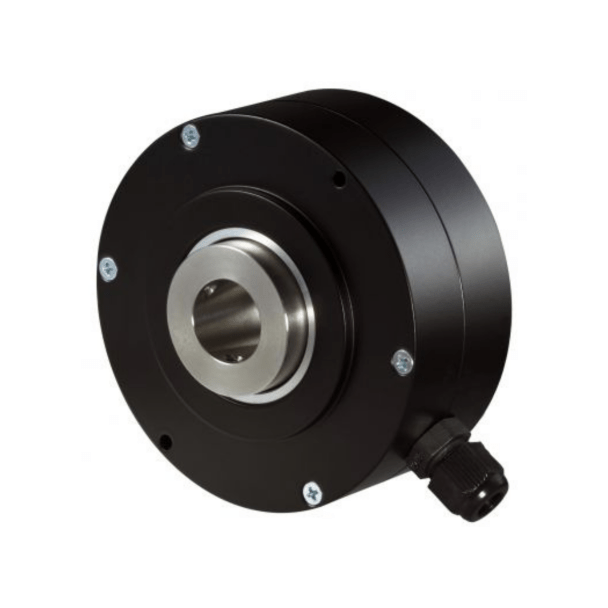
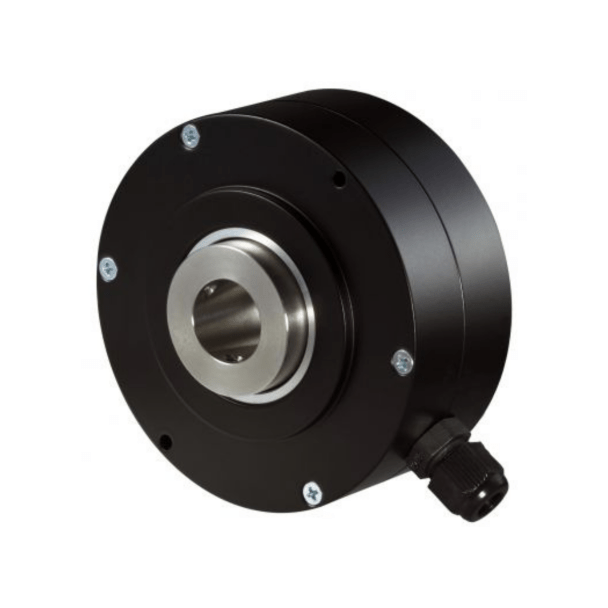
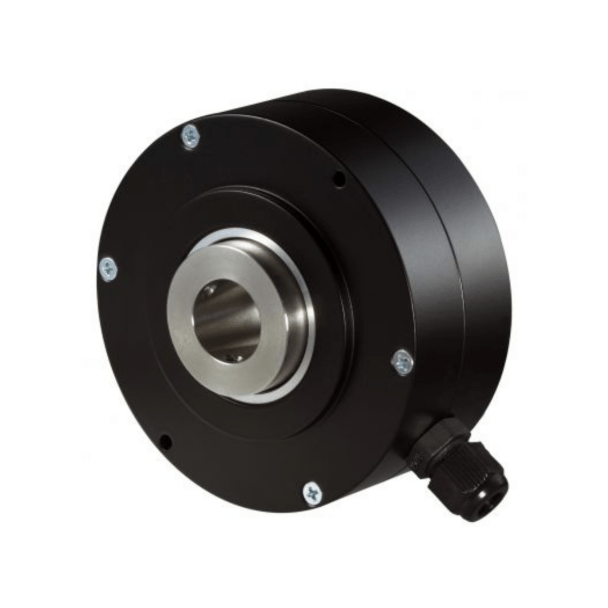
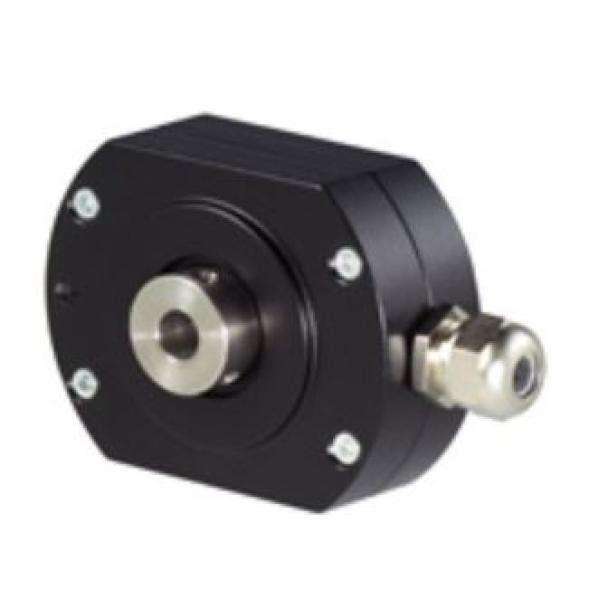
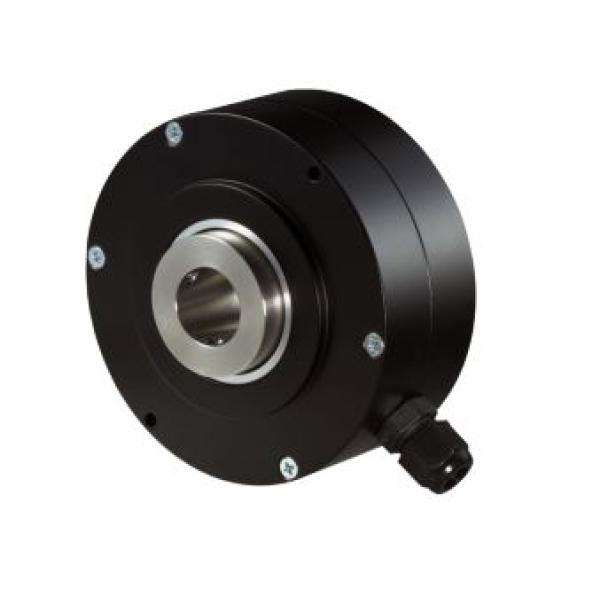
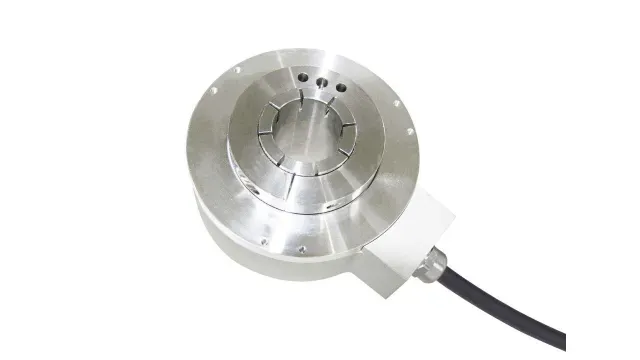
A through hollow shaft incremental encoder mounts straight onto a machine or motor shaft, with the shaft passing all the way through the encoder body. It needs no coupling and no separate alignment, so it's one of the most compact and cost-effective ways to add speed and position feedback to rotating equipment. This guide covers how through hollow shaft encoders work, how they compare with blind hollow and solid shaft designs, the key specifications, and how to choose the right model for your application. It also covers the POSITAL and PCA ranges available from PCA in Australia.
Need help selecting an encoder? Send any questions through our contact page here, or call us directly on 1300 236 467
What is a through hollow shaft incremental encoder?
An incremental encoder converts shaft rotation into a stream of electrical pulses. A controller counts those pulses to calculate speed, direction and relative position. Most incremental encoders output two channels (A and B) 90° out of phase, so direction can be detected, plus an optional index pulse (Z) once per revolution.
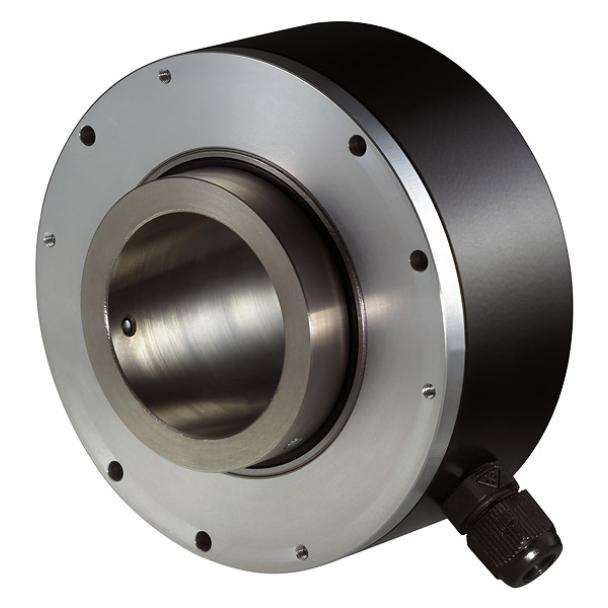
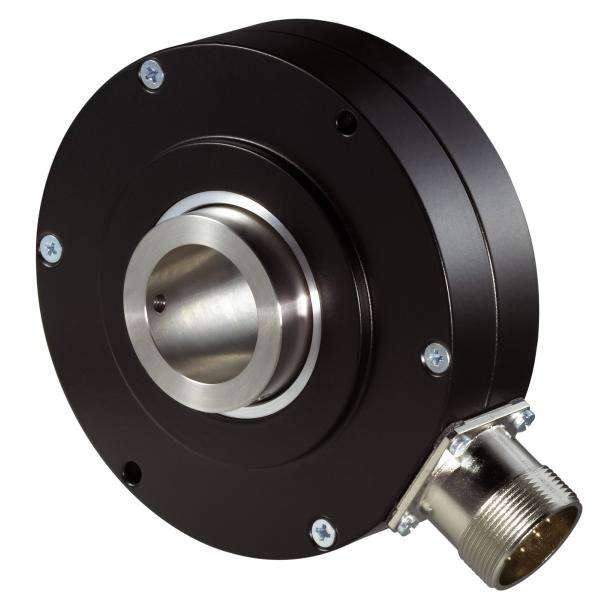
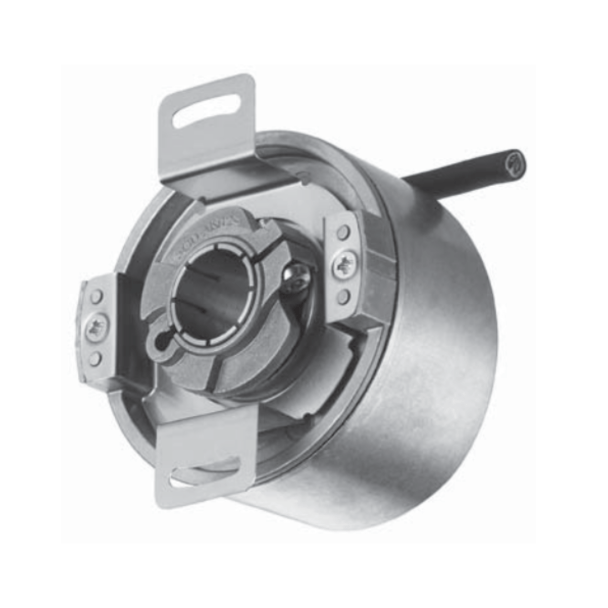
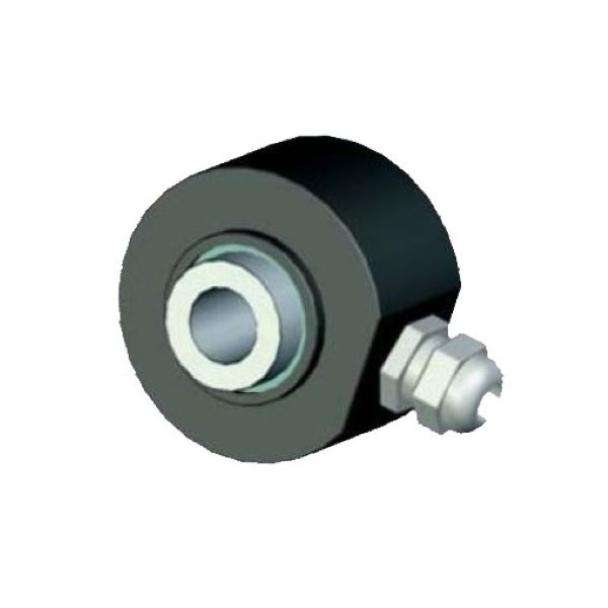
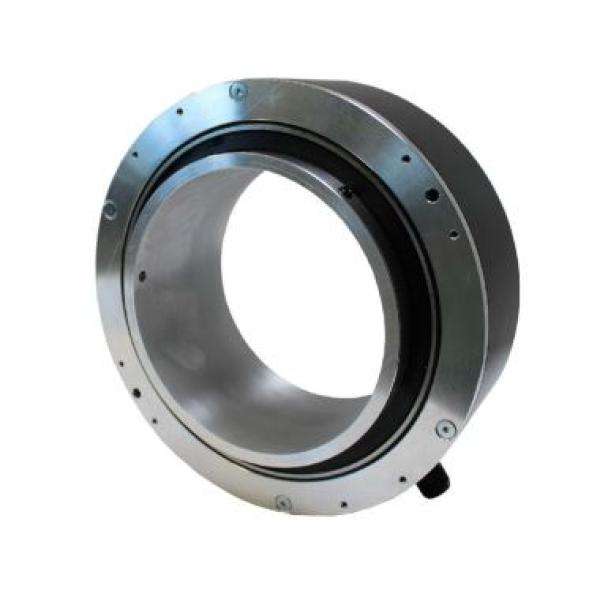
In a through hollow shaft (also called through bore) encoder, the encoder has an open bore. The machine shaft passes completely through it, and a clamping ring or set screws lock the encoder to the shaft. An anti-rotation tether or stator coupling stops the housing from turning.
Through hollow vs blind hollow vs solid shaft encoders
| Design | How it mounts | Best for |
| Through hollow shaft | Shaft passes fully through the encoder | Mid-shaft mounting, between a motor body and other shaft components, large shafts |
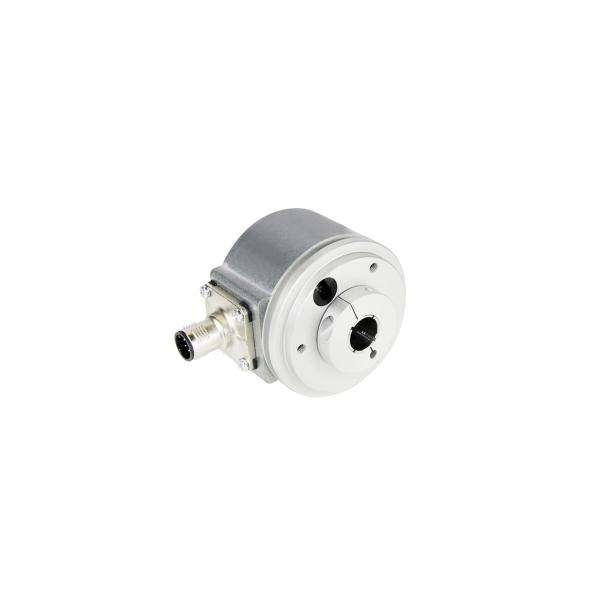
| Blind hollow shaft | Shaft enters the encoder but doesn't pass through | Shaft ends, where the encoder must sit on the end of the shaft |
| Solid shaft | Encoder has its own shaft, joined with a flexible coupling | Applications that need isolation from shaft runout or axial movement |
Choose a through hollow design when the shaft continues past the encoder position, for example a motor with a brake or fan mounted behind it.
Benefits of through hollow shaft encoders
- No coupling needed: removes a part, a failure point and a source of backlash.
- No shaft alignment: the encoder centres itself on the shaft, which cuts installation time.
- Space-saving: fits between the motor body and other shaft-mounted components.
- Lower installed cost: fewer parts and faster fitting than a solid-shaft encoder with a coupling and bracket.
- Rugged: POSITAL through hollow encoders use aluminium housings with an IP65 rating for dusty or wet environments.
Typical applications
Through hollow shaft incremental encoders are used wherever rotary motion has to be monitored on industrial machinery, including:
- Servomotors and AC/DC motor feedback
- Material handling equipment and conveyors
- Printing presses and converting lines
- Packaging machinery
- Cranes, hoists and winches
- Pumps, fans and general process equipment
How to choose a through hollow shaft encoder
- Shaft diameter: measure the shaft and choose a matching bore (or use reducing sleeves).
- Resolution (PPR): higher PPR gives finer position and smoother low-speed control.
- Output type: TTL or HTL, to match your controller.
- Supply voltage: 5 V or 11–30 V/5–30 V.
- Environment: IP rating, temperature, vibration and wash-down needs.
- Connection: cable (and length) or MIL-type connector.
- Maximum speed: check the encoder's rated rpm against the shaft's top speed.
Installation tips
- Slide the encoder over the shaft without forcing it, and never hammer it into place.
- Tighten the clamping ring to the specified torque.
- Fit the anti-rotation tether so it can absorb shaft runout without stressing the bearings.
- Use shielded cable and earth it correctly, especially for long runs near VFDs.
Frequently asked questions
What is the difference between a hollow shaft and a through hollow shaft encoder? "Hollow shaft" covers both blind and through designs. A through hollow encoder lets the shaft pass all the way through. A blind hollow encoder is closed at one end and mounts on the end of a shaft.
Do through hollow shaft encoders need a coupling? No. They mount directly on the shaft and are held still by an anti-rotation tether, so no coupling or alignment is needed.
What IP rating do POSITAL through hollow encoders have? IP65, in a rugged aluminium housing.
Can I use a through hollow encoder with a PLC? Yes. Choose a Push-Pull (HTL) output for standard 24 V PLC high-speed counter inputs, or RS422 (TTL) if your input card supports differential signals.
Where can I buy through hollow shaft encoders in Australia? PCA supplies POSITAL, PCA and W&S through hollow shaft encoders Australia-wide from Melbourne, Brisbane, Perth and Sydney.
Need help selecting an encoder? Send any questions through our contact page here, or call us directly on 1300 236 467